
Getting things done does not have to be hard. You do not need expensive apps or complicated systems. Sometimes the simplest habits make the biggest difference. Life awesome productivity tips focus on working smarter, not harder. They help you use your time well. They reduce stress.
They make your day feel less chaotic. These tips work for students, employees, and anyone who wants to get more done. They are free and easy to start. You can try one today and see the difference. This guide brings together the best ideas from experts and real people who have figured out how to stay productive without burning out.
Start Your Day with Intention
How you start your morning sets the tone for the whole day. Small actions in the first few minutes can make everything else easier.
Brain Dump the Night Before
Before you go to bed, grab a piece of paper and write down everything on your mind. The work thing you are worried about. The email you forgot to send. The fact that you are out of milk. It does not need to be organised. It just needs to be out of your head .
Your brain does not know the difference between an important work project and a reminder to buy groceries. It holds onto both with the same urgency. Once you write it down, your brain can let it go. You will sleep better and wake up feeling clearer .
Read More: How to Build an Awesome Life After 30: Real Steps That Work
Drink Water by Sunlight
When you wake up, get a glass of water and stand near a window with natural light. Drink slowly. This simple routine rehydrates your body after sleep and helps regulate your internal clock . Natural light in the morning promotes alertness and improves your mood. It takes just two minutes but prepares your body and mind for the day ahead .

Plan Your Day with Purpose
A good plan keeps you focused. It stops you from wasting time on things that do not matter.
Write a Physical To-Do List
In the morning, write your tasks on paper. Rank them by importance, not by what is easiest or what is already at the top of your inbox . The hard, important thing goes first. There is something about physically crossing an item off a paper list that a digital checkbox does not replicate. It sends a small signal to your brain that says "that is done, move on" .
Use the "Eat a Frog" Method
Do the task you want to do the least first and save the best for last . Getting the worst task over with when you are most motivated helps with later procrastination. Once the hard thing is done, the rest of your day feels easier. This is one of the most effective productivity hacks for employees who struggle with avoidance.
Limit Your Active Tasks
Keep your active view to one or two tasks at a time. When you keep ten browser tabs open, your brain spends energy deciding where to look . Limiting your active view forces you to finish the immediate job. This reduces decision fatigue and keeps your daily targets visible .
Use Your Time Wisely
Time is your most valuable resource. These tips help you use it better.
Try the Pomodoro Technique
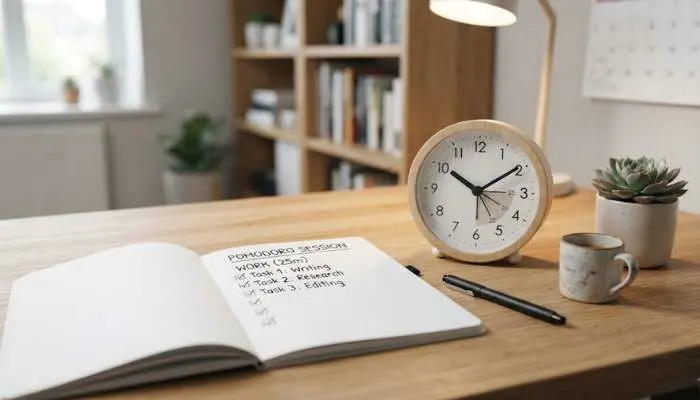
Work for 25 minutes with complete focus. Take a 5-minute break. That is one "Pomodoro". After four Pomodoros, take a longer 15 to 30 minute break . The technique works because it matches your brain's natural attention span and prevents mental fatigue . Do not think of those short breaks as slacking off. They are essential for maintaining concentration. Your brain needs recovery time to process information.
Protect Your First Hour
Do not check your email or messaging apps first thing in the morning. Delaying your inbox login protects your primary attention block . Checking messages lets external requests dictate your entire schedule. You can spend your early peak energy on your own projects instead of responding to other people's urgent notes. This practice is highly valuable for remote professionals who need to manage independent schedules .
Set Work Goals in Hours, Not Tasks
Aim for a certain number of hours of work instead of specific tasks . This takes the pressure off individual tasks and helps you just study or work. On days where you feel less motivated, do work that requires less brain power, like updating your calendar or sorting your computer files . You are still being productive even if you are not writing essays or doing heavy work.
Create the Right Environment
Your surroundings affect how well you focus. A good space makes good work easier.
Find Your Focus Place
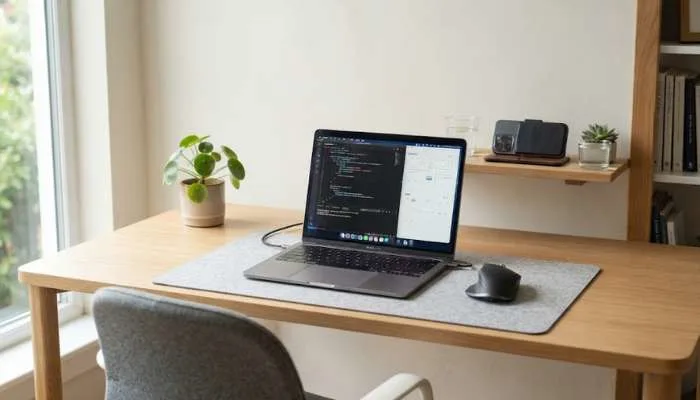
Choose an environment that suits you. Most people prefer quiet study environments, either at home or in a library. Some people need background music. Others work best at a cafe . Your study area should be well lit and comfortable but not too cosy. Do not work from your bed. Your bedroom signals relaxation, which can make focus harder .
Eliminate Distractions
Put your phone in another room when you need to focus. Use app blockers to manage your screen time. Turn off all notifications during work periods . If you need your phone for music or a timer, put it on airplane mode. Just because you are using it does not mean you have to look at your social media feeds. Silence your phone and move it away from your desk. Tell friends and family you are working and cannot be disturbed .
Build a Start-Up Routine
A consistent start-up routine signals your brain that it is time to concentrate. A fixed sequence of small actions removes the initial friction of starting a difficult assignment . Your routine might involve closing your email client and opening your main document. This process creates a predictable environment that prevents your mind from wandering during the first ten minutes of work .
Stay Focused and Energised
Keeping your focus and energy up throughout the day takes effort. These tips help you maintain momentum.
Use a "Parking Lot" for Thoughts
When you remember an unrelated chore mid-task, write it down on a dedicated notepad . This satisfies your brain's need for resolution without breaking your current focus. You keep your attention on the primary document because you know the secondary task is safely recorded for later . This works exceptionally well during long writing or coding sessions.
Take Regular Breaks
Do not think of breaks as rewards for working hard. They are essential parts of the process . Your brain consolidates information during rest. Without breaks, your focus drops and you start making mistakes. Set a timer so breaks do not stretch too long. Move your body during breaks. Get away from your desk. A 5-minute walk beats 5 minutes scrolling because it actually refreshes your mind .
Build Movement into Your Day
Moving your body is not just about fitness. It is about staying sharp mentally . A daily step goal gives you a small sense of achievement that fuels the rest of the day. Exercise before and between work sessions can also help you concentrate better .
Take One-Minute Breathers
Sometimes you need to clear your head before diving into a complex problem or when you feel overwhelmed. A quick minute of focused breathing can clear your head and help you enter a more creative state . Use a mindfulness app or simply take slow, deep breaths for sixty seconds.
Productivity Tips for Academics and Employees
Productivity tips tricks and hacks for academics and employees have some differences, but many of the same principles apply.
For Academics
- Break Down Big Tasks: Break down a big task into manageable chunks. Focus on one small task and take action . For example, an essay requires a series of steps. Understanding the question, brainstorming ideas, looking for reference material, making a plan, writing drafts, and editing. If any of these steps feel too big, break them down further .
- Use Active Recall and Spaced Repetition: Actively retrieve information from memory without looking at notes. Use flashcards, practice tests, or written recall exercises . Review information at increasing intervals over time to strengthen memory retention. Use spaced repetition software like Anki .
- Try Different Study Places: Having places to work outside of your bedroom desk can help with productivity. You are often less tempted to stop working and scroll on your phone . The library and study spaces work well because your brain associates them with work . Every now and then, consider taking your work to a coffee shop. A good slice of cake and a hot chocolate can do wonders for productivity .
For Employees
- Batch, Do Not Multitask: Context switching has a real cost. Studies consistently show it takes meaningful time to regain focus after a switch . Block two or three hours, close the notifications, and do one type of work at a time. This is one of the most important productivity hacks for employees who juggle many tasks.
- Protect One No-Meeting Block a Day: Pick a block of time, defend it, and use automation to cover anything that would normally interrupt it . This protects your deep work time. This is the simplest hack on the list and the one teams still struggle to keep .
- Do Not Put Feelings into Routine Tasks: Leave emotions out of routine tasks. Aim for speed. Focus on the end result. Do not self-criticise for unfinished items. Celebrate completed tasks . This helps you stay productive without getting stuck in your own head.
Be Kind to Yourself
Productivity is not about being perfect. It is about doing your best with the time and energy you have.
Remember You Are Human
You are a person, not a productivity machine . Be kind to yourself. We all have good and bad days. University and work are about balance. Give yourself the grace to spend time enjoying aspects of life outside of work or study .
Define What "Enough" Looks Like
Interrupt the cycle of self-criticism by defining what "enough" looks like . Allow yourself the grace to end the day without finishing everything. Doing something is better than nothing. Start with just one small step. With practice, you will get better at setting realistic timeframes .
Celebrate Small Wins
Celebrate completed tasks, even the small ones . Acknowledge your progress. This builds momentum and keeps you motivated. The small achievements fuel the rest of your day.
FAQs
1. Mornings feel all over the place. Any ideas?
The night before, just write down whatever is on your mind. Work stuff, personal stuff. Get it out of your head. In the morning, drink some water and let some light in. Do not grab your phone straight away. That puts you in reaction mode. Pick one thing from your list and start there.
2. There is one task I keep dodging. How do I deal with it?
Do it first. Right at the start. Your energy is best in the morning. That task drains you even when you are not doing it. Get it out of the way and the rest of the day feels lighter. It is that simple.
3. I am at my desk all day but not much gets done.
Sitting there for hours does not mean you are working well. Your brain needs short breaks. Work in smaller chunks. Get up and move around every so often. Your focus drops without rest. Those breaks actually help you get more done.
4. My phone keeps distracting me.
Put it somewhere you cannot see it. A bag, a drawer, another room. If you need it for music, switch off the internet. Notifications can wait. Your attention is worth more than a quick buzz.
5. What if I try all this and still have a rough day?
That happens sometimes. We all have off days. Do not be hard on yourself. Do a few small tasks instead. Clean up your files, clear your inbox, tidy your desk. That still counts. Tomorrow is fresh.