You want to know how to improve kids thinking skills. That is a good goal. But you do not need a classroom or a workbook. You need everyday life. A lost shoe. A broken toy. A spilled drink. Each small problem is a chance for your child to think. Most parents jump in too fast. We give answers. We fix things. We fill every quiet moment. That stops thinking before it starts. This article shows you a different way.
What Are Thinking Skills for a Child?
A thinking skill is just the ability to stop, look at a problem, and try something. That is it. When a child sees a mess and picks up one thing, that is thinking. When a child hears a story and asks "did that really happen?" that is thinking.
You do not need another name for it. Do not call it executive function or cognitive processing. Just call it thinking.
Kids think all day long. But they need practice thinking through hard things. Most kids quit too fast. They cry or yell or walk away. Your job is to help them stay a little longer.
Read More: Kids and Internet Safety: How Parents Can Protect Children Online
How to Improve Kids Thinking Skills Starting Tonight?
You do not need a plan for next week. You can start tonight at dinner. Here is how.
Stop Answering So Fast
This is hard. I know. When your kid asks "why is the sky blue?" Do not. Instead say "I do not know. What do you think?"
Your kid will say something silly. That is fine. The point is they tried to make a guess. Guessing is thinking. You can look up the real answer later together. But first let them guess.
I did this with my daughter last week. She asked why dogs have wet noses. I said "what do you think?" She said "so they can smell their food better." Is that true? No. But she thought about it. That matters more than the right answer.
Let Them Make Small Choices
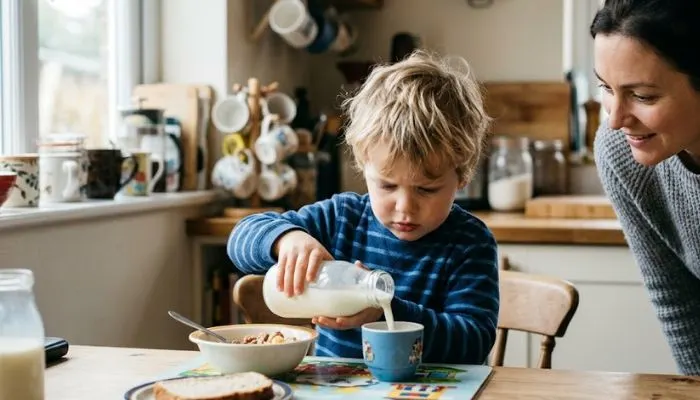
A child who never chooses never learns to think about choices. Start small. At breakfast say "do you want the red cup or the blue cup?" That is a thinking moment. They have to look, pick, and commit.
- Then make the choice bigger. "Do you want to clean your room before or after your show?"
- Each choice builds the same muscle. They learn to look at two things and pick one. That is thinking.
Use the Broken Thing Rule
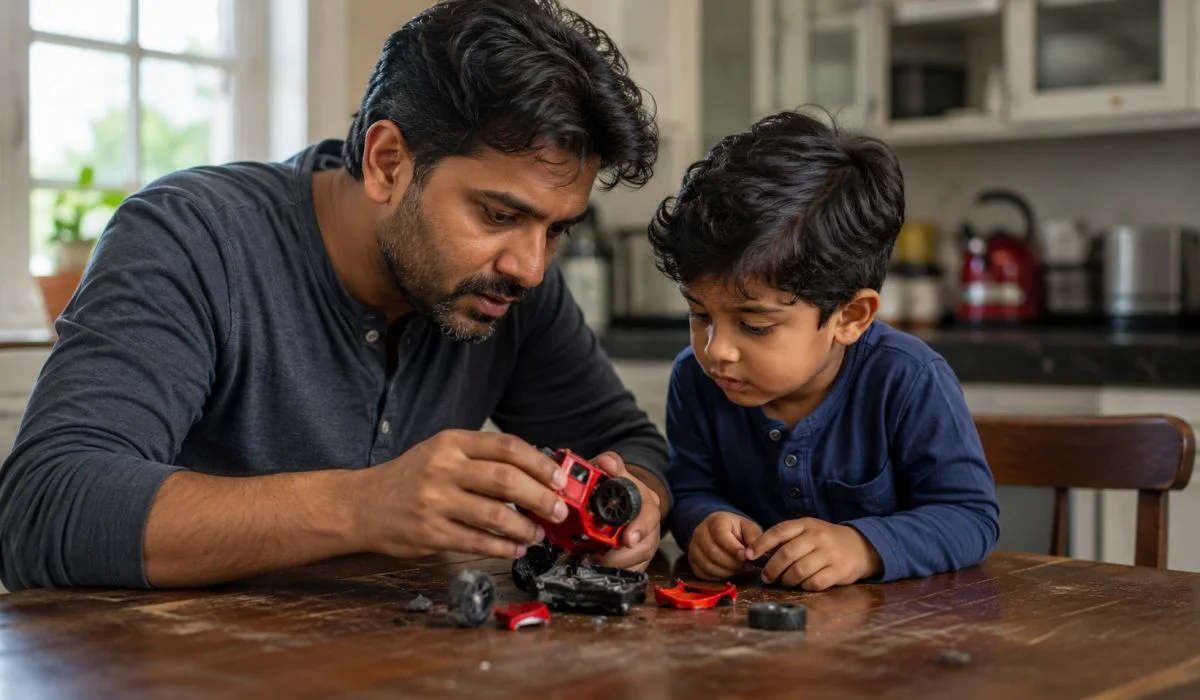
Something will break in your house today. A crayon. A zipper. A toy. Do not throw it away. Do not fix it yourself. Sit with your child and say "let us look at this. What part is not working?"
Then wait. Let them point. Let them poke. Let them try to push the piece back in. Even if they cannot fix it, they tried. That trying is the whole goal.
Last month our toaster stopped working. My son wanted me to buy a new one. I said no. We opened the back. We looked inside. We found a stuck piece of bread. He pulled it out. The toaster worked again. He still talks about that.
How to Develop Critical Thinking Skills in Students
School changes things. Kids hear facts from teachers and friends. They watch videos that say one thing. They need a simple way to check if something is true.
Teach One Small Question
- The only question you need to teach is "how do you know?"
- That is it. No big words. No lessons on fake news. Just that one question.
- Your child says "sugar makes you hyper." You say "how do you know?" They say "my friend told me." You say "ok. But did your friend do a test? Did your friend watch you eat sugar and then watch you sit still?"
- You are not being mean. You are being curious. That is the tone you want. Curiosity, not a test.
- After a few weeks your child will start asking the same question back to you. That is when you know it worked.
Compare Two Things Side by Side
Get two short videos about the same animal. Or two picture books about the same event. Ask your child "what is different?"
You do not need to use special words like "omission" or "perspective." Just say "why do you think that story did not tell us about the mother bear?"
This works for kids as young as five. My neighbor did this with two Cinderella stories. Her daughter noticed one book had a fairy godmother and one did not. That started a whole talk about why writers change stories.
Critical Thinking Skills Activities for Kids That Take Five Minutes
You are busy. I am busy. We do not have time for big projects. These activities take almost no time.

The What Else Game
- Pick any object in your house. A fork. A shoe. A pillow. Ask your child "what else could this be?"
- A fork could be a hair comb. A shoe could be a phone holder. A pillow could be a friend in a pillow fight. There is no wrong answer. The game is about seeing one thing many ways. That is thinking.
- We play this in the car. My kids fight over who answers first.
The Three Clues Game
- Think of one thing in your house. Give three clues. Let your child guess.
- Example: I am round. I hang on the wall. You look at me to see the time. (a clock)
- Then let your child give you three clues. This game teaches them to pick important details and leave out the rest. That is a thinking skill.
The Wrong Way Night
One night a week do everything wrong on purpose. Put your shirt on backward. Eat dessert first. Brush your teeth before dinner. Let your child catch your mistakes.
When they catch you, ask "what is the right way? why is that way better?" This is fun. But it also teaches your child to notice what is normal and question if normal is always right.
You May Also Read: How to Improve Kids Concentration at Home: Effective Tips & Strategies
How to Develop Critical Thinking Skills in Kids at Different Ages
A three year old thinks with their hands. A ten year old thinks with words. You have to change how you talk to each one.
Little Kids Age Three to Five
These kids learn by touching and breaking and spilling. Do not stop them. Guide them.
What works at this age:
-
Let them pour water from one cup to another. They will spill. That is fine. They are learning about full and empty.
-
Ask "what comes next?" when reading a book. Point to the next picture. Let them guess the story.
-
Give two choices only. "Do you want to wear the red shirt or the blue shirt?" Too many choices shuts down a little kid.
Do not ask "why" too much. They do not have the words for why yet. Ask "what" and "where" and "which one."
Middle Kids Age Six to Nine
These kids can plan a little. They can hold a few steps in their head. They can also lie. That is actually a thinking step. Lying means they understand that other people have different thoughts.
What works at this age:
- Ask them to make a three step plan for anything. Getting dressed. Making a sandwich. Cleaning one shelf.
- Play the "what would happen if" game. What if rain was juice? What if cats could talk? What if school started at night?
- When they lie, do not yell. Say "I think you are not telling me everything. What are you worried will happen if you tell the truth?"
That last one is gold. It teaches them to think about feelings and outcomes at the same time.
Older Kids Age Ten to Twelve
These kids can think about their own thinking. That is a big deal. They can look back and say "I was being silly" or "I should have done that differently."
What works at this age:
- Ask them to argue the opposite of what they believe. If they love dogs, ask them to give you three reasons cats are better.
- Show them a headline from the internet and ask "what is one thing this story does not tell us?"
- Let them see you change your mind. Say "I thought that show was bad but I watched the second episode and I was wrong. It got better."
Kids this age need to see adults being wrong and fixing it. That teaches them that thinking is a process, not a test.
A Real Day With Real Thinking Moments
Here is what yesterday looked like in my house. No extra work. Just small moments.
Morning. My son could not find his left shoe. He started to whine. I almost helped. I did not. He looked under his bed. He looked in the closet. He found it in the bathroom. He yelled "I found it!" That was his win.
Breakfast. My daughter wanted a second pancake. I said "you have to give me one good reason." She said "because I am still hungry." That is a reason. She got the pancake. She learned that reasons work better than whining.
After school. My son said his teacher was mean because she gave him a yellow light for talking. I said "tell me what happened from her side." He stopped. He thought. He said "well I did talk three times after she said stop." That was a big moment. He saw the other side.
Bedtime. My daughter asked if monsters are real. I said "what do you think?" She said "no because I have never seen one." Good thinking kid.
That whole day had five thinking moments. No worksheet. No screen. Just life.
What Parents Do That Kills Thinking Skills?
I have done all of these. You have too. It is fine. Just stop when you notice.
Giving the answer too fast. Your kid asks a question. You answer before they can guess. Next time just wait three seconds. Let them try first.
Fixing mistakes. Your kid puts their shirt on backward. You fix it. Let them wear it backward. They will feel it and fix it themselves later.
Saying "good job" for easy things. When you say good job for putting on a shoe, your kid learns that small things deserve praise. Then they stop trying hard things. Save your praise for when they struggle and keep going.
Filling silence. When the car is quiet, you turn on music. When your kid is bored, you give them a screen. Boredom is when thinking happens. Let your kid be bored. They will figure something out.
How to Know If This Is Working?
You will not get a report card. You will see small changes.
- Your kid will say "wait let me think." That is a win.
- Your kid will try a second way after the first way fails. That is a win.
- Your kid will ask you "how do you know that?" That is a big win.
You will also see fewer meltdowns. Not zero. But fewer. Because your kid will learn to pause before crying. That pause is the thinking skill.
My son used to scream when he lost at a game. Last week he lost and said "that was not fair but I will try again." That took a year of small moments to build. But it happened.
A Quick List for Busy Parents
You can save this part. It is all the main ideas in very short form.
- Wait before helping. Let them struggle a little.
- Ask "how do you know that?" once a day.
- Play a thinking game for ten minutes.
- Let them make a small choice each morning.
- Show them when you change your mind.
- Ask open questions, not yes or no questions.
- Stop fixing their small mistakes.
- Let them be bored sometimes.
One Last Thing
You do not need to do all of this. Pick one thing. Try it tonight. Ask your kid "what do you think about that cloud?" or "what else could a spoon be?" or "how do you know that the movie is real?"
One small question. That is all it takes to start.
Your kid will probably say something silly. That is fine. The point is they tried. And tomorrow you ask another question. And the next day another.
After a month you will look back and realize your kid is thinking harder. Not because of a class or a toy. Because of you. Because you waited. Because you asked. Because you let them struggle and find their own way. That is how you improve a kid's thinking skills. One small moment at a time.