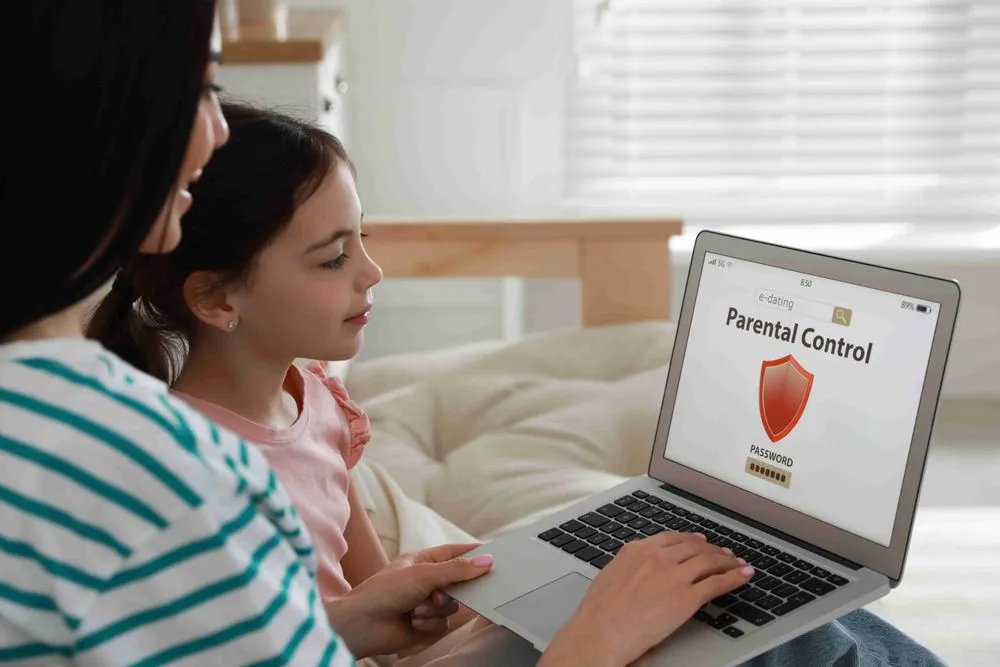
The best way to keep kids safe online isn’t by taking away their devices—it’s by teaching them how to navigate the digital world wisely. Start with an open, judgment-free conversation today about what they do on their phones and tablets, and make sure privacy settings are activated on every app they use.
As a parent who has watched my own children grow up with tablets in their hands, I know the worry that creeps in when they disappear into their rooms with a screen. I remember walking past my son’s door, hearing him giggle at something, and feeling that pang of anxiety: Who is he talking to? What is he watching?
I’m not a tech expert, and I don’t have a degree in child psychology. But over the years, I’ve learned that keeping kids safe in this digital playground is a lot like teaching them to cross the street. You don’t just forbid them from ever crossing; you hold their hand, you teach them to look both ways, and eventually, you trust them to do it alone.
Let’s walk through this together. I’m going to share exactly what I’ve learned from experts and from my own trial and error about how to keep kids safe online.
Why "Online Safety" Sounds Scarier Than It Needs to Be
Horror stories are heard on the news. We hear of cyberbullying, internet predators, and indecorous material. It is enough to make any parent get the router out of the window. I’ve been there. However, the fact I needed to accept is as follows: the internet is not disappearing.
Our children require it both at school, and socialization, as well as to pursue their interests. Dr. It was elucidated with perfect understanding by Tricia Tayama, a child abuse specialist and a pediatrician: “It is not possible to shut one application and think that we have mitigated the risk.
Rather, she explains, the children should be educated how to be aware of how to spot dangers on the Internet, and enabled to report it. It is our business to guide them not to be a keeper.
How to Keep Kids Safe Online: Start with the Basics

So, where do we even begin? I discovered that I could not sit my kids down and hold a big lecture. Their eyes were blurred and they had no desire but to get out. The only thing that worked was to incorporate safety into our day-to-day lives.
Have the "Little and Often" Conversation
You do not have to undergo one frightening birds and the bees speech about the internet. Rather, talk little chats here and there.
- Car: Hey, I heard a funny Tik Tok sound today. What do you fellows look at on there?
- During dinner: Have you seen anything on the web today that made you feel weird or yuck?
This is aimed at getting them to be able to discuss their online life as much as they would discuss their day at school. The professionals at Homeland Security helped me to understand that the key to developing secure online practices is to engage in constant debates and act as a reminder. My daughter actually tells me about some strange message that she received when she is certain that she will not make me panic and block her phone.
You may also :- How to Improve Kids Concentration at Home: Effective Tips & Strategies
Set the Ground Rules (Together)
I did a huge blunder at the very beginning: I created a list of rules and nailed it on the fridge. It took approximately two days before it was disregarded.
- Now we establish a family internet contract mutually. We sit round and settle on such things as
- No electrical appliances left in the bedroom. Our kitchen has one of the charging stations. There everybody has a phone that is asleep. Mine too.
- Ask before downloading. Only new apps are not added without a rapid discussion about the purpose of the app.
Privacy is key. This is a mantra you need to repeat on a daily basis: You should not share your full name, address, school name, or passwords with anyone on the Internet.
Building a Safe Digital Playground: Privacy and Protection
After talking down, now we can have the fence built around the playground. It is our time in the realm of the tech.
Lock Down Those Privacy Settings
I had the habit of simply handing the iPad without any second thought. Today, I understand that a privacy settings of each and every application is the first defense line.
Spend some time with your child and peruse through their apps. Make it a team activity. Show them how to:
- Privatize all their social accounts to ensure that only friends who have been approved see their contents.
- Switch off the location services in applications that do not necessarily require it (such as games or regular scrolling on social media). Does the pizza delivery application really have to know your current location? No, it doesn't.
- Deny block applications access to their camera or microphone unless they are in active use of such services.
Use Tech to Help You (Parental Controls Are Your Friend)
It has always been in my mind that by installing parental control apps I didn't have trust in my children. But I flipped my thinking. I explained to them that this was not because I did not trust them. This is due to the fact that I do not trust the bad guys out there. It made a huge difference.
It is not spying level such as tools such as Qustodio or Kaspersky Safe Kids; it is about establishing a safe boundary. They let me:
- Limit screen time daily to have the device lock so I am not the bad guy.
- Block the adult content so that they do not accidentally access it.
- Check what their most used apps are and this provides excellent discussions.
- Pediatric psychologist Dr. Ann-Louise Lockhart best defines it when she says that monitoring tools are merely tools. They are best practiced through openness, trust and compassion.
Navigating the Tricky Stuff: Cyberbullying and Strangers
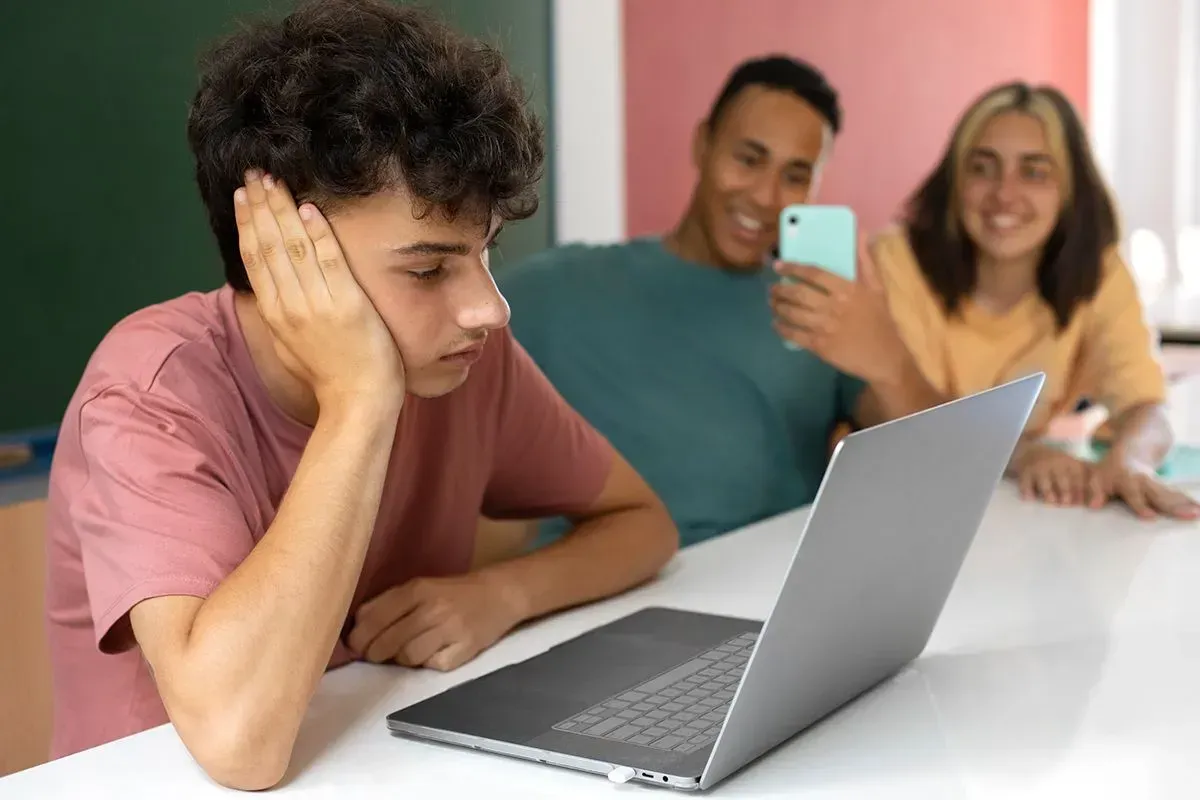
That is what I find keeping me up at night. What do we do to ensure that we safeguard our kids against individuals of ill intentions and other children who may be mean?
What to Do About Cyberbullying
Cyberbullying is not a stage but may be long-term with emotional distress, anxiety, and even depression. I explained my children a three-step strategy to follow in case they witness or are victims of bullying on the Internet:
- Don't respond. When one fights a bully, it is like adding petrol to a fire. It just makes it worse.
- Block and Report. Block the person with the help of the features of the app. Abuse could be easily reported in most games and social media.
- Tell a Trusted Adult. That is me, their father, their instructor. No matter what. I assured them that they will never be in trouble with me because they reported that they are getting bullied.
Recognizing the Tricks of Online Predators
It is a very difficult subject, yet we must discuss it. I tell my children that not everybody is what they are saying they are on the Internet. A 12 year old girl who requests to be friends may turn out to be a dangerous person.
I instruct them to be on the lookout of these red flags:
- A person who is eager to shift the conversation out of the open game into a private chat application such as the WhatsApp or Snapchat.
- Anyone who requests them to maintain secrecy of it to the parents.
- Individuals that provide them with gifts, such as in-game currency or gift cards, without any reason.
I ensure that they are aware that safe adults (as we are) will never require of them to maintain confidentiality and will not violate their privacy.
Creating a Healthy Balance: Unplugging and Real Life
Lastly, safety is not about not doing bad things. It is about establishing a healthy collaboration with technology.
Model the Behavior You Want to See
This was the most difficult lesson to me. I was telling my children to leave their screens as I spent my dinner time scrolling Instagram. Ouch.
Children are taught to do what we do, but not what we tell them. I now consciously make an effort to:
- Step aside my phone when they address me.
- Have device-free dinners.
- Unplug together. We play board games, have walks or simply cook together. It demonstrates them that there is life outside the internet.
Teach Digital Citizenship
I really like the idea of the Ethical Culture Fieldston School, which makes children understand that core values such as kindness, care, and respect need to be implemented in online environments.
We discuss the concept of digital footprints, how you leave everything you post online there forever. I would pose them questions such as, How do you suppose that comment of yours could make that person feel? or Would you be ashamed of that picture, Grandma? It would make them ponder before they post.
I also educate them on critical thinking. Not all they read in the internet is accurate. We discuss how to identify fake news and why we should not share the things that appear outrageous without researching.
Conclusion: You've Got This
We are all not so great at this. I still worry. I still sometimes see my youngest watching video games that I would not want him to watch. But the goal isn't perfection. The goal is connection.
Through open discussions, playing with the tools we have at our disposal and educating our children to be good human beings in the real world and in the cyber world we are giving them the means with which to wade safely in this world. We are teaching how to keep kids safe on the Internet one chat at a time. You've got this.
Frequently Asked Questions
1. Which is the best parental control application?
There is no best app since this will depend on the age of your child and the requirement of you. Such applications as Qustodio and Kaspersky Safe Kids are very good to establish time restrictions and content filtration. The most essential is to employ them openly and discuss with your child the reason why you are employing it.
2. What do I say to my child about online predators so as not to scare them?
Keep it calm and factual. You need not go to graphic detail. Follow straight principles such as, when someone you do not know wants you to keep a secret or gives you a present then tell me immediately. Framing the world as a place that scares, rather than making you feel like you are in a relationship with them to keep them safe.
3. What would I do in case my child was cyberbullied?
To begin with, keep your head and thank your child that she told you. Make them understand that it is not their fault. Do not respond to the bully. Rather, block the user, take screenshots of the messages as proof and report the behavior to the school or even the platform itself.
4. Is it right to take away the phone of my child at night?
Absolutely. It is one of the best practices that have been suggested by most experts. A central charging point of the kitchen or your bedroom will make sure that kids are not tempted to be up at all night using social media, which not only keeps them asleep but also in good mental health.
5. When is the appropriate age to give my child social media?
The majority of sites such as Instagram, Tik Tok, and Snapchat have an age restriction of 13. Adherence to such rules is not only due to the law, but also because younger children might lack the critical thinking ability to deal with the complexity of social media.